Engage the disengaged
We all make mistakes. Don't let that be a reason to give up on somebody.

The maths
People
do not reoffend
Saving
per offender per annum
Saving
per young offender per annum
Annual saving
To the tax payer
State of Play
The prison estate in England and Wales currently holds approximately 87,300 people across 121 prisons, with around 83,900 men and 3,500 women in custody. The vast majority are serving sentences in England, and almost all will eventually return to live in our communities. This means that effective rehabilitation is not simply a prison issue—it is a public safety and community issue. Supporting people in custody to develop the skills, confidence and resilience needed to lead positive, law-abiding lives is essential to reducing reoffending, strengthening communities and delivering better outcomes for society as a whole.
Education & Purposeful Activity
Many people entering custody have experienced significant educational disadvantage. Nearly three in ten (29%) report having no formal qualifications on entering prison, compared with around one in eight adults in the wider population. More than half report previous difficulties with school attendance, and many have experienced long-standing barriers to education, training and employment.
While prisons provide a range of education and vocational opportunities, engaging those furthest from learning remains a significant challenge. Sport offers a powerful and proven alternative route to participation, building trust, confidence and motivation before acting as a gateway into wider education, skills development and employment.
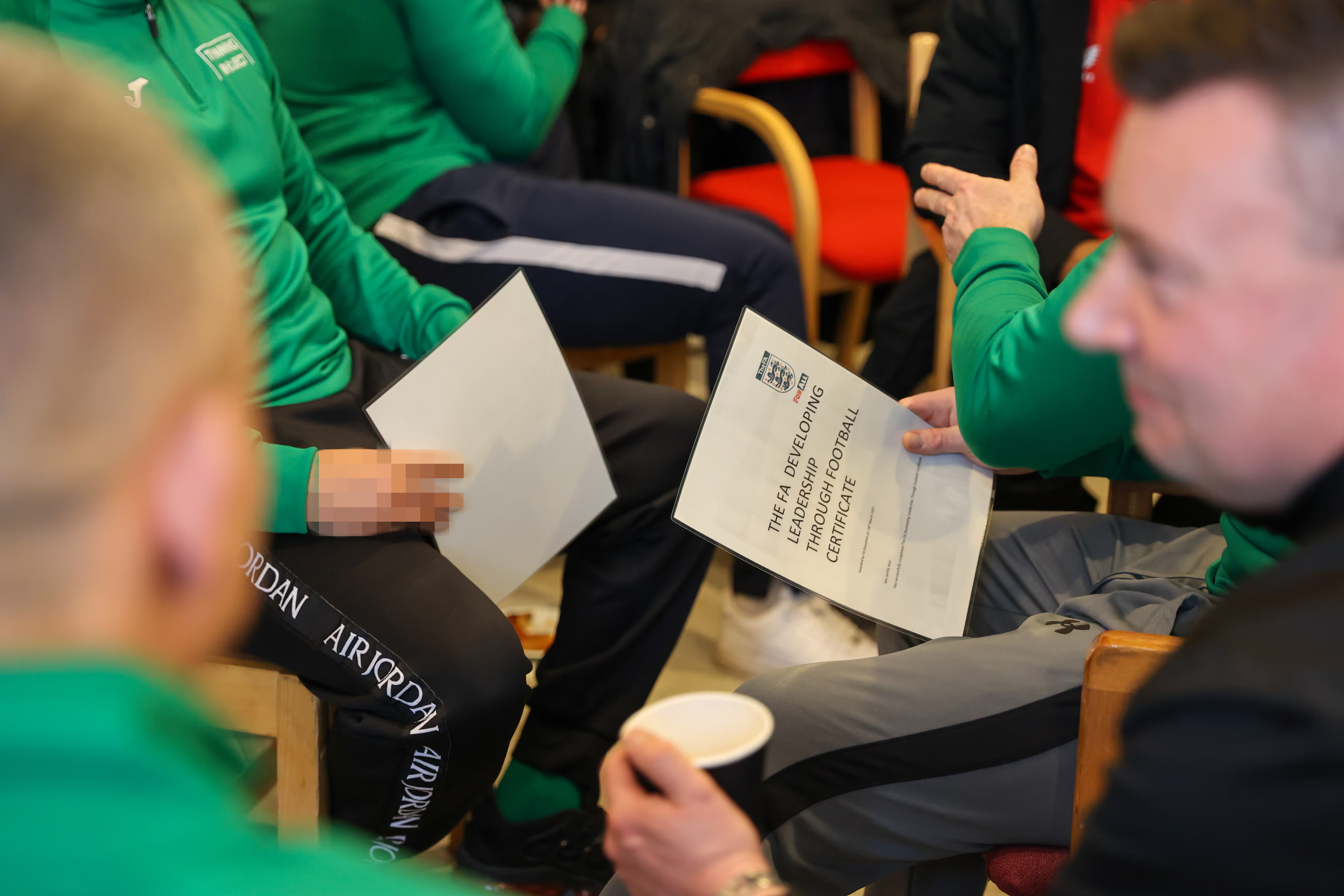
The Twinning Project's football-based model is uniquely effective in reaching individuals who may not engage with traditional interventions. Through structured coaching, accredited learning and personal development, it transforms participation in sport into a pathway towards improved physical and mental wellbeing, enhanced life skills, greater employability and successful reintegration into society.
This approach directly supports HMPPS's ambition to increase meaningful purposeful activity, improve wellbeing, reduce reoffending and create safer prisons and stronger communities. Recent inspection findings also highlight that too many prisoners still have limited access to sport and physical activity, reinforcing the need for high-quality programmes that maximise engagement and rehabilitation.
How the Twinning Project and Football Makes a Difference
The Twinning Project harnesses the unique power and universal appeal of football to engage people who are often the hardest to reach. Working in partnership with professional football clubs, governing bodies and correctional services, it uses the credibility of the game and the expertise of club coaches to build trust, inspire participation and create meaningful relationships.
For many people in custody, previous experiences of education, authority and support have been negative, creating barriers to learning and personal development. The Twinning Project overcomes these barriers by using football as the initial point of engagement before guiding participants through accredited learning, coaching qualifications, employability skills and personal development.
Football is not the end goal - it is the catalyst. The Twinning Project transforms a shared passion for the game into a structured pathway that improves wellbeing, develops life skills, increases confidence and employability, and supports successful rehabilitation. In doing so, it helps create safer prisons, reduces reoffending and delivers lasting benefits for individuals, communities and society.
Professional Club Foundations – Trusted Community Partners
The Twinning Project is delivered through the charitable foundations of professional football clubs. These independent charities are the community arms of their clubs, using the power, reach and credibility of football to improve lives through education, health, inclusion and employability programmes.
Rooted in their local communities and trusted by participants and partners alike, club foundations are uniquely placed to engage people who are often hardest to reach. The connection to a professional football club provides an identity and sense of belonging that few other organisations can replicate.
Before the Twinning Project, football-based rehabilitation programmes within prisons were delivered by only a small number of clubs, often in isolation and without a consistent framework or measurable outcomes. The Twinning Project changed this by creating a structured, evidence-led model that enables professional club foundations to deliver high-quality, accredited rehabilitation programmes at scale, with shared standards, training and evaluation across the network.
The relationship with the Twinning Project and prisons resides with the Community Foundations of the clubs. There is a common misconception that the Foundations are awash with funds - this could not be further from the truth. Although they share the same name as the football club and wear their club badge or crest, in most cases they receive next to no direct funding from the club. As a consequence, the education, employability and football-based interventions delivered by the Foundations are paid for by grant awarding bodies. Prior to the Twinning Project there were only a handful of clubs delivering football-based programmes, spasmodically, with no structure, and no clear aim or objective
People in custody can spend up to 22–23 hours a day confined to their cells, particularly in overcrowded or under-resourced prisons. Prolonged isolation and inactivity can severely impact mental and physical health, increase anxiety and depression, reduce motivation, and limit opportunities for rehabilitation, education and meaningful human interaction, making successful reintegration into society significantly more difficult.
22 - 23 hours
The average time spent in a cell by an individual in custody.
The low prospect of employment upon release contributes to low self-esteem, boredom and lack of value which further contributes to a deterioration in mental health.

Self-inflicted deaths in custody
This chart illustrates the number of self-inflicted deaths in custody in UK prisons year by year.
Self-harm in custody
This chart illustrates the number of self-inflicted harms in custody in UK prisons year by year.
Make a difference today
If you would like to support the Twinning Project and help us transform lives through education, sport, and rehabilitation, please reach out — together we can make a lasting difference.

Proudly supported by
The Twinning Project is proud to be supported by its valued partners, whose commitment and collaboration strengthen our mission to create positive change.